
I’ve been playing professional football for years. I’ve shared a dressing room with players who wear shin pads the size of a credit card, and players who still strap on the full plastic slab they’ve worn since they were fourteen.
The mini shin pad thing isn’t new. But it’s gone from a quirk to a trend to something close to a default among younger players — and now grassroots clubs are starting to ban them.
So let me give you the honest version. Not the marketing version. The version I’d give a teammate who asked me in the changing room.
The short answer
Footballers wear mini shin pads because FIFA’s Laws of the Game require shin guards but don’t specify a size.
That’s it. That’s the loophole.
The rule says you must wear shin guards, they must be covered by your socks, and they must be made of “a suitable material to provide a reasonable degree of protection.” Nowhere does it say how big they have to be.
So a pad the size of a matchbox is technically legal. And once one player figured that out, the rest followed.
But that’s the legal reason. The reasons players actually give you are different.
The four real reasons players go small
1. It feels better. Genuinely.
This is the one nobody can argue with, and it’s the reason I understand the trend better than most people who write about it.
A traditional shin pad is a piece of rigid plastic that sits between your leg and your sock. It doesn’t move the way your leg moves. When you sprint, it shifts. When you plant your foot to change direction, you feel it. When you sweat, it slides.
The lighter and smaller the pad, the less you notice it. And when you’re playing at pace, “not noticing your equipment” is worth a lot.
I spent years cutting down regulation pads with scissors because the full-size ones drove me mad. I know exactly why players do this. It’s not vanity. It’s that most shin pads on the market genuinely get in the way.
2. The look
Let’s be honest about this part.
Jack Grealish. Phil Foden. Paulo Dybala. Memphis Depay. When the players who define modern football’s aesthetic all wear low socks and pads you can barely see, that becomes the look. Youth players copy it because that’s what youth players have always done — you wear what your favourite player wears.
There’s nothing wrong with that. But it’s worth naming it honestly: a big part of this trend is style, not performance.
3. Confidence — and a bit of self-deception
Elite footballers spend their careers learning to avoid contact. Read the tackle, shift the weight, take the touch a half-second earlier. After a decade of that, a lot of players genuinely believe they won’t get caught.
And at the very top level, the environment supports that belief. Referees protect stars. Reckless challenges get punished harder than they used to. The average Premier League match is less violent than a Sunday league match in the rain.
So the pad becomes a formality. Something you wear because the rules say so, not because you expect to need it.
That works — right up until it doesn’t.
4. It’s what’s available
Here’s the part that gets missed in every article I’ve read about this trend.
Players aren’t choosing tiny pads because tiny pads are good. They’re choosing tiny pads because the alternative is a heavy, rigid, sweat-soaked slab that slides down your leg by the 30th minute.
That’s not a real choice. That’s picking the least annoying option.
I’ll come back to this.
The generational split you can see on the pitch
There’s a photo that went around from a Brighton match that captures this perfectly.
James Milner, 39 years old, standard full-size shin guard. Next to him, Harry Howell, 17, wearing a pad that covers maybe three inches of shin.
Same team. Same match. Completely different philosophy about what protection means.
And it’s worth noting: Cristiano Ronaldo and Lionel Messi — two players with two of the longest elite careers in the history of the game — have worn standard-sized pads their entire careers.
That might be a coincidence. Or it might not be.
The part nobody wants to talk about
In 2025, Tottenham’s João Palhinha took a heavy challenge that completely shattered his carbon fibre shin pad.
The pad broke. His leg didn’t.
That’s the entire argument for shin pads in one sentence. The pad absorbed force that would otherwise have gone into his tibia. A mini pad would have done nothing — the contact point would have been above or below it.
You can go a whole season without needing your shin pads. Two seasons. Five. And then one tackle happens and the difference between a bruise and a fracture is whether there was material between the studs and your bone.
I’m not going to lecture anyone about this. Adults can weigh their own risk. But I’ve seen what a broken tibia does to a career, and I’ve seen how quickly it happens. It’s not a slow injury. It’s one second.
And if you’re a parent buying pads for a fourteen-year-old — that kid isn’t playing in a controlled elite environment with referees protecting them. They’re playing on a wet pitch against another kid who’s still learning how to tackle. The risk profile is completely different.
That’s why grassroots clubs are starting to ban mini pads. They’re not being difficult. They’re looking at the injury data.
What the trend is actually telling us
Here’s my honest read, and it’s the reason I ended up building shin pads instead of just complaining about them.
The mini pad trend isn’t really about protection. It’s a rejection of bad equipment.
Players don’t want less protection. They want less weight, less bulk, less slipping, less interference. They’ve been told for decades that those things come as a package — that if you want light, you accept less protection, and if you want protection, you accept a slab strapped to your leg.
That was true for a long time. It’s not true anymore.
The mini pad trend is what happens when players are forced to choose between two things they shouldn’t have to choose between. It’s not a preference. It’s a workaround.
The third option
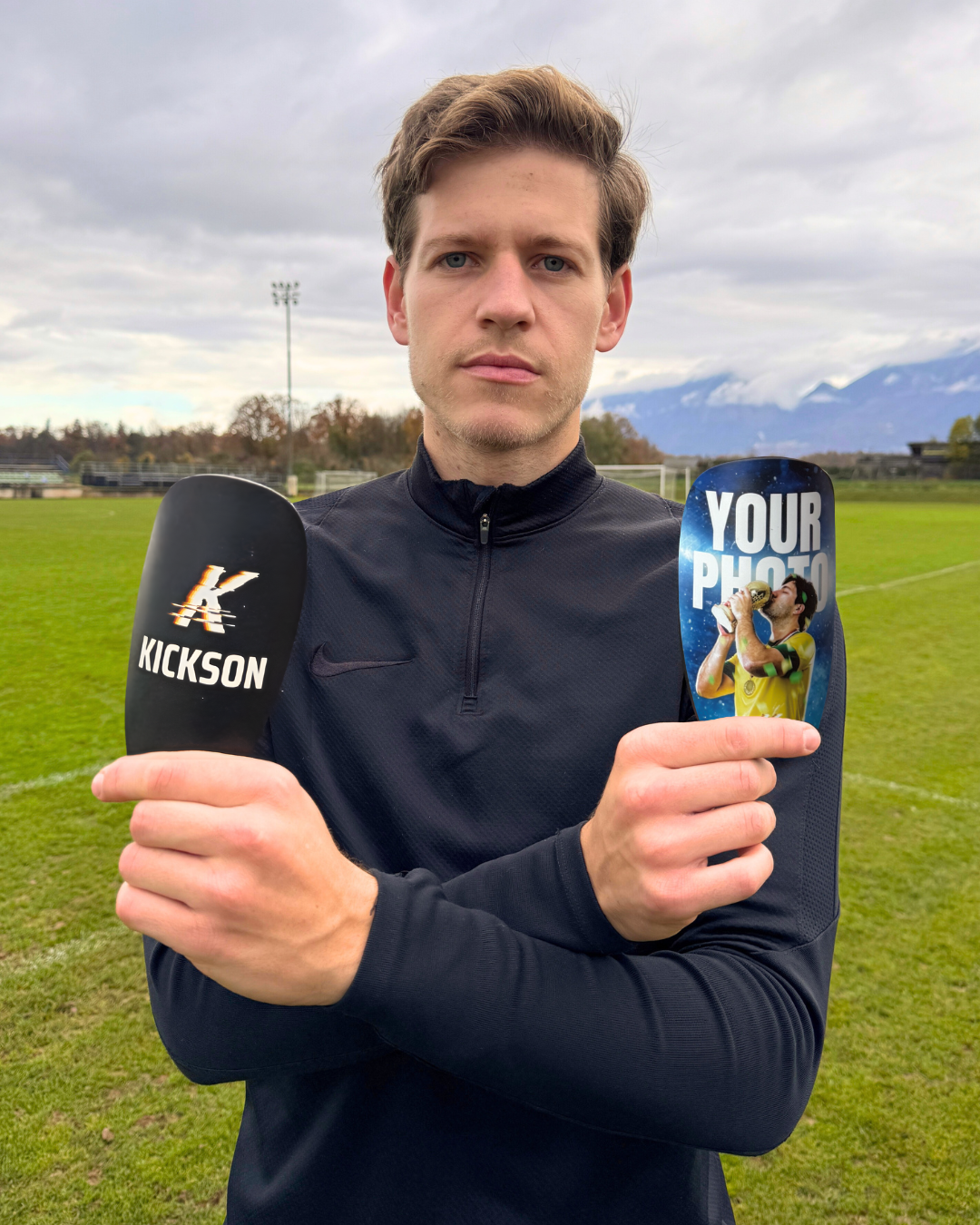
When I started Kickson, this was the exact problem I was trying to solve.
I’d tried everything on the market. Carbon fibre — protective, but rigid and heavy. Foam — light, but useless. “Lightweight” pads that still weighed 45-50 grams and still slid down my leg.
So we spent two years on materials. We surveyed 300 players and found that 87% weren’t satisfied with what they were using, 74% had already switched brands looking for something better, and 12% weren’t wearing pads at all — using cardboard, insoles, or nothing.
Twelve percent. Playing competitive football with no protection, because everything available was bad enough that they’d rather risk it.
The Elite ended up at 33 grams per pad at size M. For context, a standard shin pad weighs 70-110 grams. Most pads marketed as “lightweight” still weigh 45-50.
The weight reduction comes from the foam — a compound we call 4K Impact-Freeze Foam that compresses instantly on impact and spreads force across the entire pad instead of one point. It absorbs about 70% more impact than standard EVA foam while using significantly less material. (More on the engineering here.)
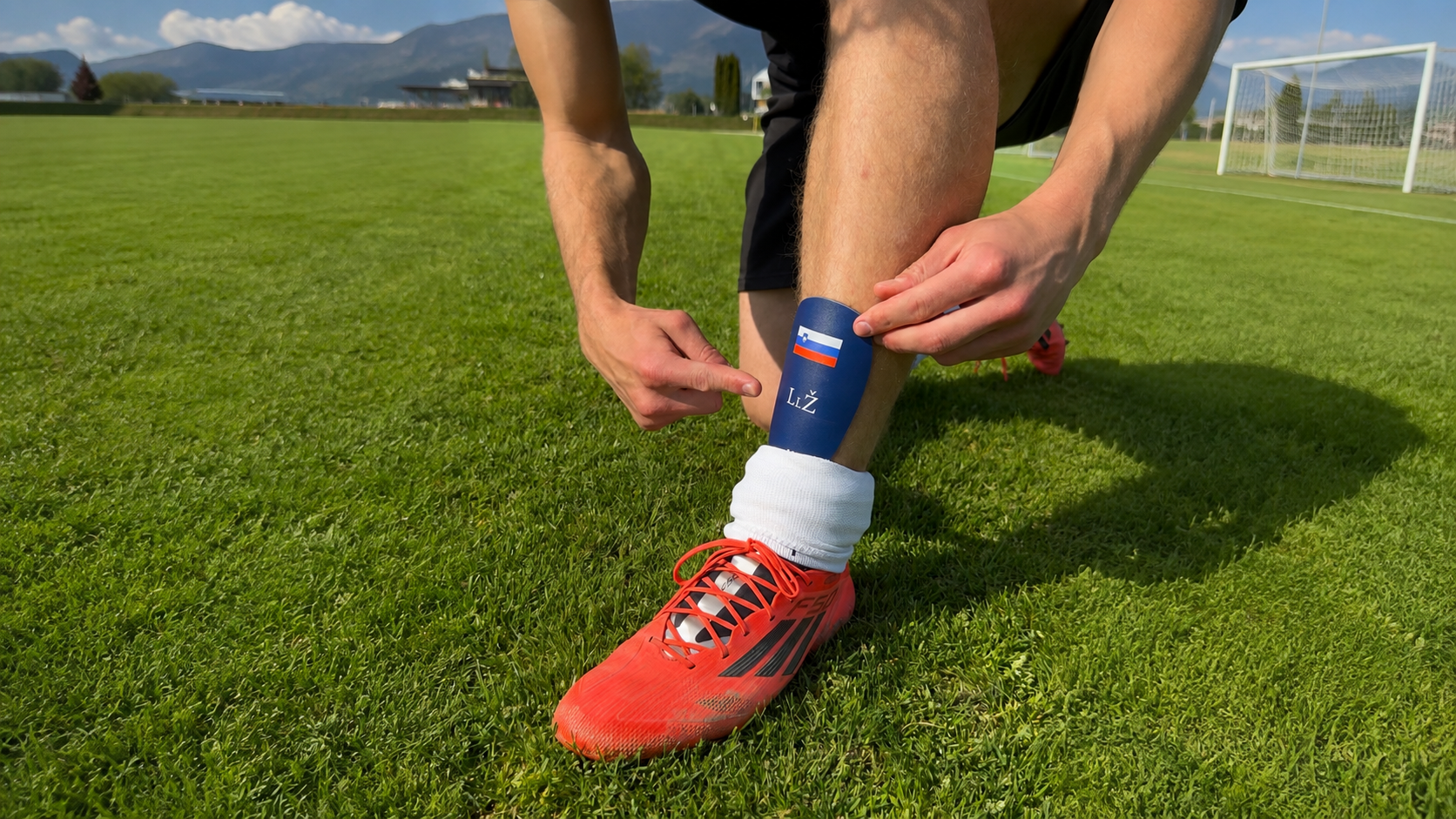
The other half of the problem was slipping. If a pad moves, it doesn’t matter how good the material is — it won’t be where it needs to be when the tackle comes. So we built Hyper-Lock: a grip system that holds the pad against the inside of your sock, and a grip-coated interior that anchors it to your leg. No tape. Nothing to re-adjust at half time.
The result is a full-coverage pad that weighs less than most players’ mini pads. Which means the trade-off the mini pad trend is built on — protection or comfort, pick one — doesn’t have to exist anymore.
What I’d actually tell you
If you’re a professional or semi-professional adult who’s made an informed decision about your own risk: it’s your leg. You know what the game demands. I’d still tell you a 33-gram full-coverage pad gives you everything the mini pad gives you plus actual protection, but I’m not going to pretend I don’t understand the appeal.
If you’re a youth player — wear a proper pad. Your body is still developing, your league is less controlled, and the players around you are still learning how to tackle safely. This is not the place to optimise for how your socks look.
If you’re a parent buying for a young player — don’t buy the smallest pad you can find because that’s what they asked for. Buy the lightest pad you can find that still covers the shin. That’s a different thing, and it solves the actual problem behind the request.
If you’re currently not wearing pads at all because everything you’ve tried was uncomfortable: that’s the situation Kickson was built for. Try a proper lightweight pad before you write off shin guards entirely.
FAQ
Are mini shin pads legal?
Yes. FIFA’s Laws of the Game require shin guards to be worn and covered by socks, and to be made of a suitable material offering a reasonable degree of protection — but no minimum size is specified. Individual leagues and grassroots associations can and do set stricter rules, so check your competition’s regulations.
Do mini shin pads actually protect you?
Minimally. They satisfy the letter of the law. They cover a small area of the shin, which means a challenge landing above or below that area hits unprotected bone. They’re a compliance solution more than a protection solution.
Why don’t professionals just wear better shin pads?
Many are starting to. The trend toward mini pads grew because full-coverage pads were heavy and uncomfortable. As lighter full-coverage options become available, the reason for going tiny weakens.
How light can a shin pad actually be?
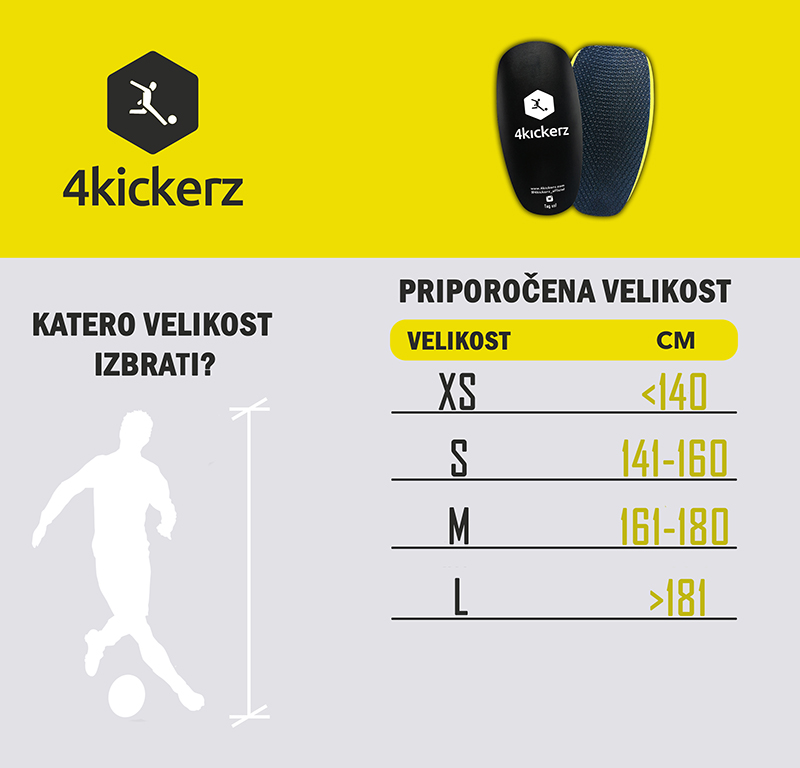
Kickson’s Elite is 33 grams per pad at size M — roughly a third of the weight of a traditional pad, with full shin coverage. Sizes XS and S come in lighter still, at approximately 22g and 28g respectively.
Should my child wear mini shin pads?
No. Youth football has a different risk profile than elite professional football — less controlled tackling, developing bodies, and less referee protection. Full coverage matters more, not less, at youth level.
The point
The mini shin pad trend isn’t stupid. It’s a rational response to bad equipment.
But it’s solving the wrong problem. Players don’t want less protection — they want less weight, less bulk, less slipping. Those are engineering problems, not trade-offs you have to accept.
We built the pad I wanted to wear. 33 grams, full coverage, no tape, doesn’t move.
You shouldn’t have to choose.