

I’ve been given a lot of football gifts. Boots, balls, gadgets, training aids, things I’d never have bought myself.
Most of them I used twice.
That’s not ingratitude — it’s just what happens when someone buys football equipment for a player without knowing how football equipment actually gets used. The gift looks great in the box. It doesn’t survive contact with a real training schedule.
So this is the list I’d give a parent who asked me directly. What young players actually use, what sits in the cupboard, and how to tell the difference before you spend the money.
The only test that matters
Does it come to training?
That’s it. That’s the whole filter.
A young player’s kit bag is small and they pack it themselves. Anything that earns a permanent place in that bag is a gift that worked. Anything that doesn’t get packed — no matter how clever, how expensive, how well-reviewed — is a gift that failed.
Everything below is sorted by that test.
Gifts that live in the bag
1. Shin pads they’d choose themselves
Here’s something most parents don’t know: the number one reason kids stop wearing shin pads properly is that they hate the ones they have.
They’re heavy. They slide down mid-game. They rub. So the kid pushes them down into the sock, or wears the smallest thing that satisfies the referee, or forgets them.
A pad a kid actually likes is a pad they’ll actually wear — which makes it one of the few gifts that’s both wanted and genuinely protective.
What to look for:
- Weight. Standard pads are 70–110g each. Anything under 50g is a noticeable difference to a young player.
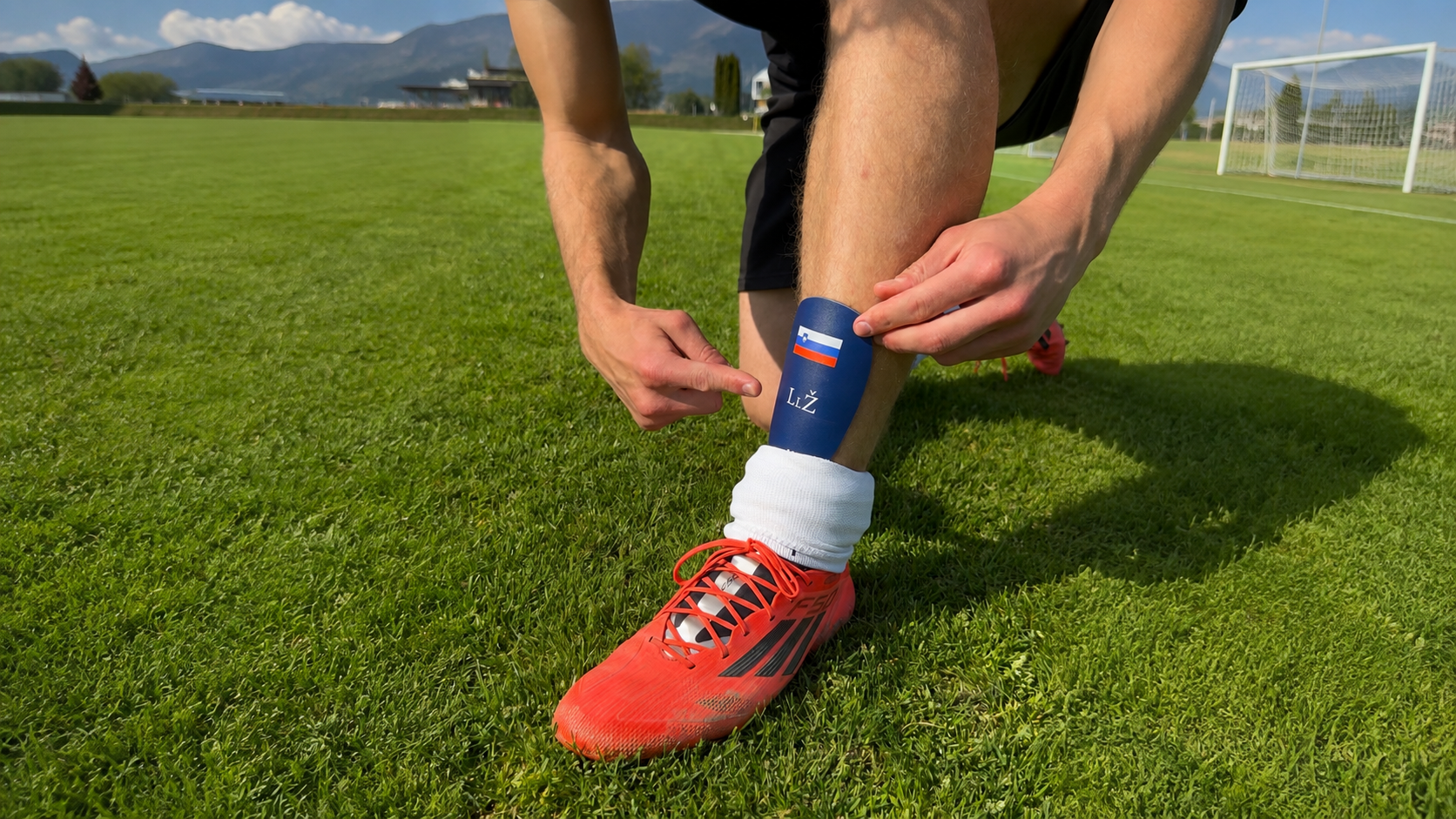
- Does it stay put without tape? If a pad needs tape, they won’t tape it.
- Full coverage of the shin. Mini pads are a trend among pros playing in a heavily refereed environment. Youth football isn’t that environment.
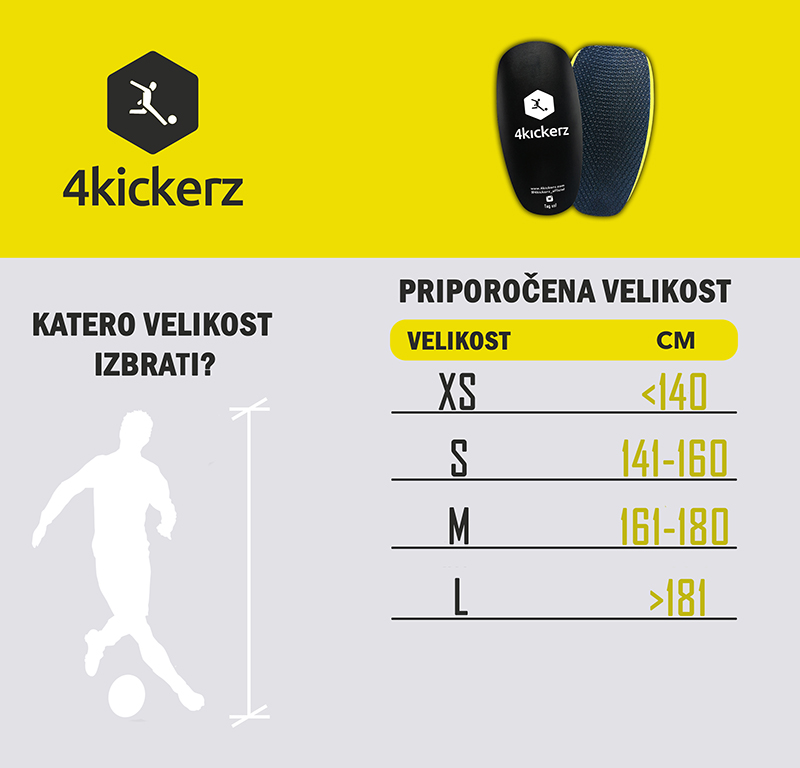
- Correct size — usually by shin length, not age. Measure from just below the knee to the top of the boot.
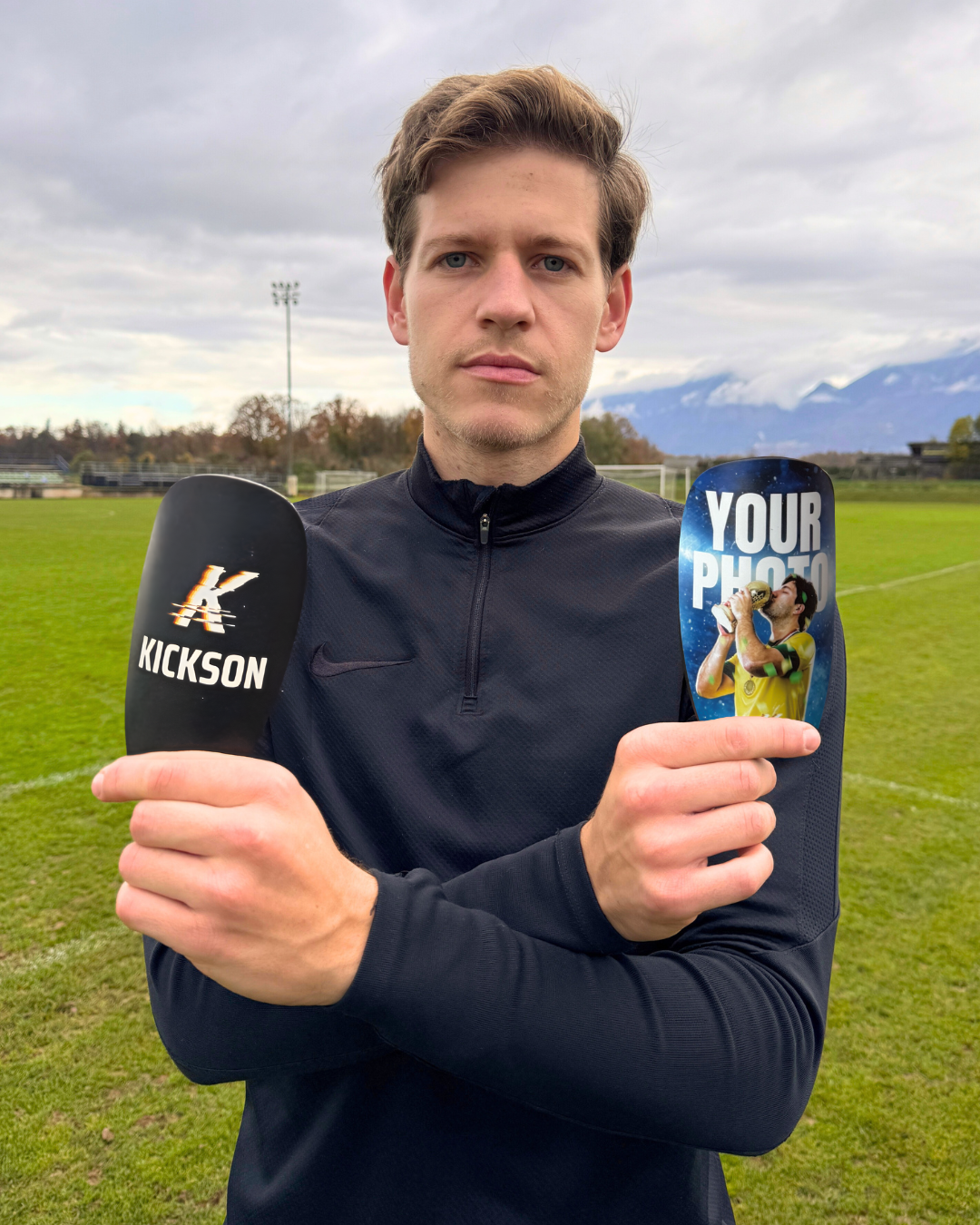
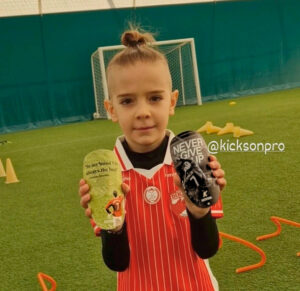
Personalising them is the part that turns equipment into a gift. A pad with their name, their number, their country’s flag or a photo on it gets worn with pride rather than compliance. That’s the difference between a kit item and a present.
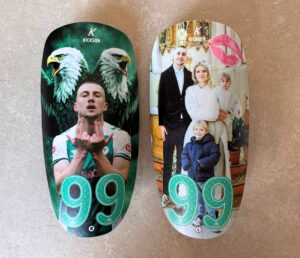
(Our Elite Custom is 33g and takes any photo or design — but the principle holds whoever you buy from. Light, full coverage, doesn’t slip, looks like theirs.)
2. Grip socks
Small, cheap, and used every single session.
They stop the foot sliding inside the boot, which matters more than it sounds — most young players have felt their foot move on a hard turn and lost half a step. Once a player has worn grip socks they don’t go back.
Buy two or three pairs. They get lost.
3. A ball that matches their surface
Not “a ball.” A ball for the surface they actually play on.
An expensive match ball on a concrete playground lasts a month. A tough training ball on grass is fine for years. Ask where they actually play — pitch, astro, playground, garden — and buy for that.
Size matters too: size 3 under 8, size 4 for roughly 8–12, size 5 from about 13 up.
4. A proper kit bag
Sounds boring. Gets used every session for years.
The bag most kids have is whatever came free or whatever fits. A bag with a separate wet compartment for boots is the upgrade nobody thinks to ask for and everybody uses.
5. Boots — but only with their input
Boots are the gift most likely to go wrong, because fit is personal and preferences are strong.
If you’re buying boots, involve them. A voucher for a boot shop where they try things on beats a surprise pair in the wrong shape almost every time.
Gifts that don’t live in the bag
I want to be honest about this section, because every other gift guide will recommend most of these.
Training cones and agility ladders
Used enthusiastically for about two weeks.
The problem isn’t the equipment — it’s that solo drills are boring and most kids won’t do them alone. If the child is genuinely self-motivated about training, they’re brilliant. If they’re not, they end up in the garage.
Buy these only if you’ve actually seen them train alone.
Light-up balls and gadget balls
Fun. Genuinely fun for a few evenings. Then the novelty wears off and they go back to their normal ball because it plays better.
Fine as a stocking filler. Not fine as a main present.
Mini goals
These depend entirely on whether they have somewhere to leave them set up. A permanent goal in a garden gets used constantly. A goal that has to be assembled and put away each time gets used once.
Be honest about your own space before buying.
Jerseys of a player they like this year
Kids change favourite players. Fast. A jersey with a name and number on the back has a shorter shelf life than you’d think, and it’s expensive for something worn to a few matches.
A plain club shirt lasts longer than a named one.
By age
Parents search this way, so here’s the honest version.
Ages 6–9
They’re playing for fun and their gear needs are simple. Comfort beats performance at this stage — kids this age abandon anything that rubs, pinches or feels heavy.
Best bets: a size 3 or 4 ball, comfortable shin pads that fit properly, grip socks, a bag they like the look of.
Skip: anything expensive or technical. They’ll grow out of it before they get the value.
Ages 10–13
The age where it starts getting serious for a lot of kids, and the age where personalised gear lands hardest. They’re forming an identity as a player and they care intensely about what their gear says about them.
Best bets: personalised shin pads, grip socks, a proper kit bag, a good training ball.
Skip: boots without their input. Preferences are strong at this age and getting it wrong is expensive.
Ages 14–17
They know exactly what they want and they’ll tell you if you ask. They also have specific opinions about brands, fit and weight that they’ll defend at length.
Best bets: a gift card so they choose, or something you’ve heard them mention specifically. This is the age where guessing is most likely to fail.
Skip: surprises. Genuinely. Ask them.
What about buying for an adult player?
Most of this list holds. But there’s one mistake people make when buying for someone who plays seriously, and I’m on the receiving end of it fairly often.
They buy football-themed things instead of football things.
The mug with a ball on it. The socks with a pitch printed on them. The framed print. The novelty keyring. All given with real affection, and all of it ends up in a drawer, because a player doesn’t want objects about football — they want better versions of the things they already use every week.
If you’re buying for someone who trains regularly:
Upgrade something they already own. Look at what’s worn out. Players are strangely reluctant to replace working equipment, so the thing they’ve been meaning to replace for eight months is almost always the right gift. Pads that have gone soft. A bag with a broken zip. Socks that have lost their grip.
Personalised gear works on adults too. It isn’t a kids’ thing. A pair of pads with something that means something to them — a name, a date, a photo, a flag — gets worn every match and noticed in every changing room. Grown adults are exactly as pleased about this as fourteen-year-olds, they’re just quieter about it.
Ask their partner or a teammate what they complain about. Every player has a running complaint about a piece of their kit. Whoever hears it most knows exactly what to buy.
What to skip: anything they’d have to change their routine to use. Serious players are deeply habitual about their equipment. A gift that asks them to switch something that already works will be thanked for and quietly ignored.
When you don’t know what to buy
Two honest situations where a gift card beats a product:
You don’t know their size. Shin pads, boots and clothing all depend on measurements you probably don’t have and can’t ask for without ruining the surprise. Guessing wrong means a return, or worse, a kid who wears something that doesn’t fit.
You don’t know their taste. Design, colour and brand preferences at 13 are strong and specific and often invisible to adults. A gift card lets them design something they’ll actually be pleased with.
There’s a version of this that isn’t a cop-out: a gift card for a specific thing. “This is for shin pads, go and design them how you want” is a real present with a real intention behind it. It just moves the choosing to the person who has the opinions.
(Ours is here, delivered by email, no expiry — but any brand that lets them customise works the same way.)
Gifts that aren’t things
Worth saying, because they consistently mean more than equipment.
A match ticket. Watching a game live at 10 stays with a kid far longer than any product. Local matches count — it doesn’t have to be a big stadium.
Time. Being taken to a pitch and played against for an hour is, according to almost every player I’ve ever asked about this, the thing they remember. It costs nothing and it’s the answer most parents don’t expect.
I got a lot of good gifts growing up. The ones I actually remember are the times someone came and played.
FAQ
What’s the best gift for a young football player who has everything?
Something personalised. Kids who already own all the gear don’t need more gear — they want something nobody else has. Custom shin pads, a personalised bag or a name-printed item gives them something with their identity on it rather than another duplicate.
How do I know what size shin pads to buy?
Measure from just below the knee to the top of the boot, and buy by that length rather than by age. Roughly: 13cm for younger or smaller players, 15cm for most teens, 17cm for taller adult-sized players. When you’re between sizes, go smaller — a flexible pad adapts, an oversized one gets pushed down.
Are expensive football gifts worth it for kids?
For things they use every session — pads, socks, a bag — quality pays for itself, because cheap versions get abandoned. For things that depend on preference or size — boots, clothing — involve them or use a gift card. Expensive and unwanted is the worst combination.
What do young footballers actually want?
Gear that makes them look and feel like a proper player. That’s usually personalisation rather than price. A mid-range item with their name on it beats a premium item without it, almost every time.
What do you buy for someone who plays football seriously?
Upgrade something they already use rather than buying something football-themed. Look for what’s worn out — pads that have gone soft, a bag with a broken zip, socks that have lost their grip. Serious players put off replacing working equipment, so the thing they’ve been meaning to replace is usually the right gift. Personalised gear also works on adults, not just kids.
Are mini shin pads a good gift for a child?
No. Youth football has a different risk profile than professional football — less controlled tackling, developing bodies, less referee protection. Buy the lightest full-coverage pad you can find instead. More on that here.
The short version
Buy things that go in the bag. Skip things that need enthusiasm to survive. Personalise if you can. Ask if they’re a teenager.
And if you’re stuck between two options, pick the one they’ll use on a wet Tuesday in February — not the one that looks best on Christmas morning.